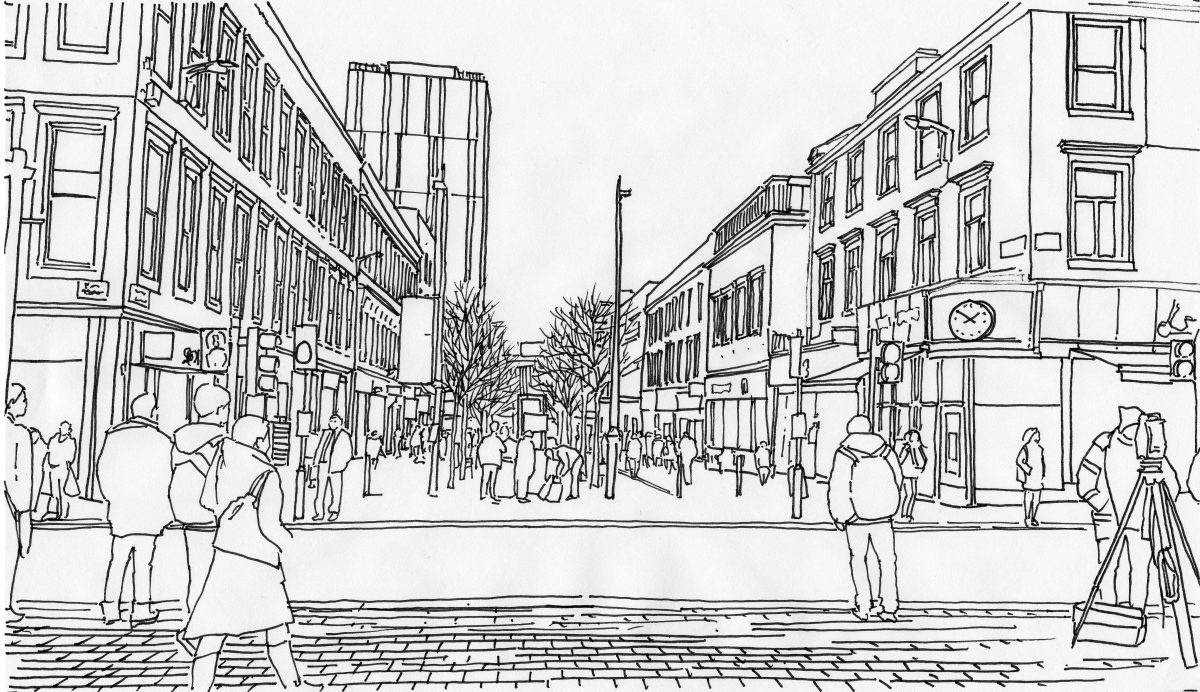
Finding traces and reading the city: everyday urban space from new angles.
Year
2017–18
Place
Interaction Design, The Glasgow School of Art
Type
Design Domain, research-led course
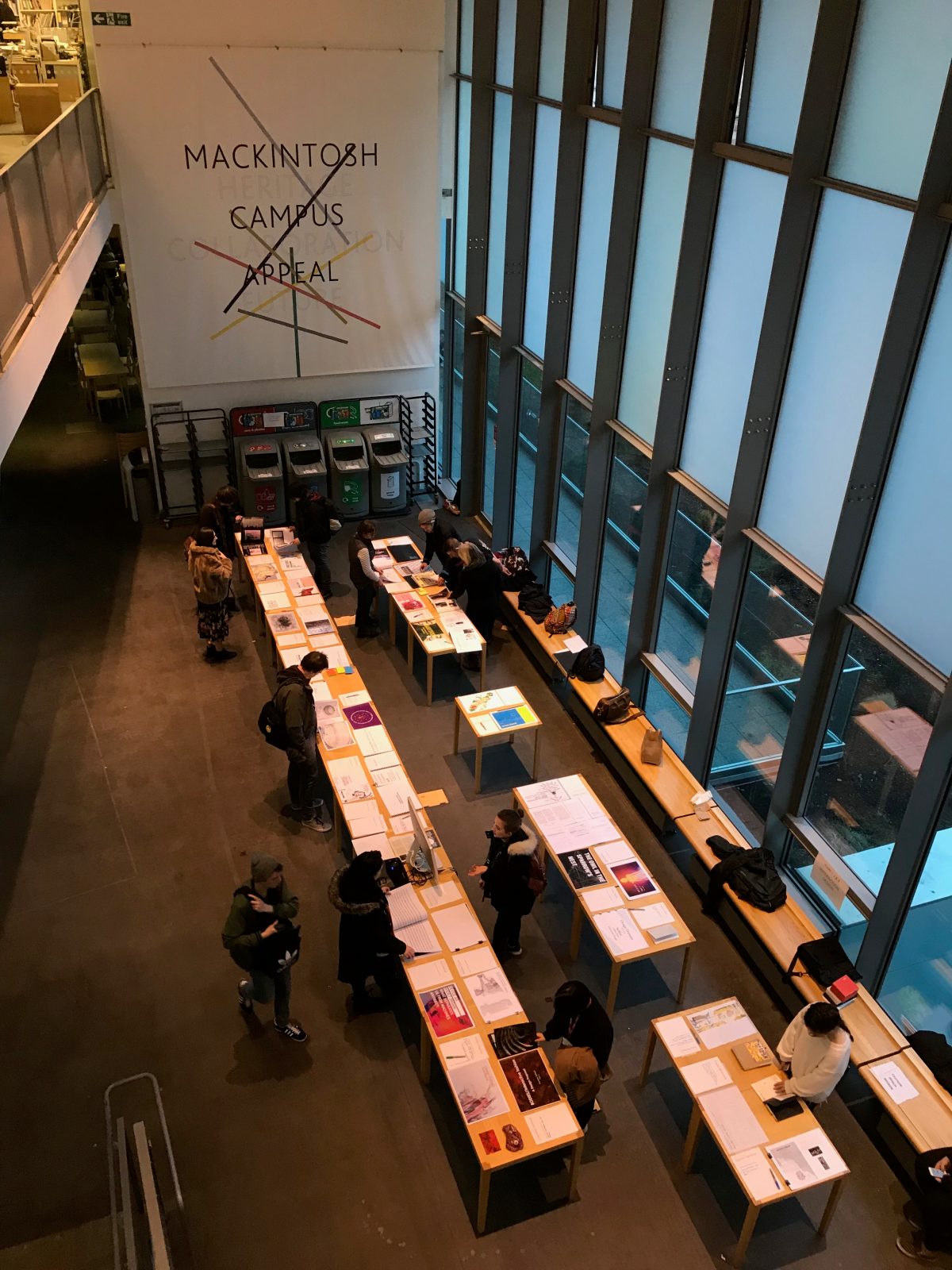
The research-led strand of the course, shown in the Reid Building. Part 1 gathered workbooks, photo albums and a film on finding traces in everyday urban space. Part 2 studied the technology companies at CES 2018 and made booklets about them.
It runs in Weeks 7, 8 and 9 of Semester 1, and Weeks 4, 5 and 6 of Semester 2.
Design Domain is research-led and practice-led. It helps you explore your design process by relating it to ideas and practice within your own design subject discipline and to ideas and practice beyond your own discipline in the wider ‘domain’ of design, including the crossdisciplinary cultural ideas and thinking that inform it. Design Domain asks you to push your practice and to develop your understanding of what you do, how you do it, and why.
Design Domain involves your own tutors, plus visiting speakers and practitioners. It kicks off with a large-scale crossdisciplinary Symposium on Monday October 30th 2017. This involves a variety of invited speakers. This Symposium is not intended to have direct links to the specifics of your studio project brief; instead it’s designed to act as a provocative and critical launchpad for your thinking process.
During the Design Domain blocks, in-studio activities and self-led learning give you a space to explore your practice, and you build on your practice through research and thinking through making. Each studio frames its project briefs in relation to one or more of the core thematics (see below), and this year these thematics are deliberately designed to interrelate, given the importance of the issues.
At the end of each Design Domain block, you’ll be exhibiting your work in an Open Studios event, where all students and staff have the right to roam, to view, to discuss and to reflect. The assessed summative submission for Design Domain will be portfolio-based, and it will reflect your process of critical thinking and reflection as well as the making of an artefact or artefacts, according to your studio project brief.
This year I did one of different project than last year. Project called “Design Domain”. This project that students in the first, second, and third grades were working on the same theme with the characteristics of each department. This year’s theme was “Bodies, Identities, Engagement and Action”.
This project was a bit different from the one we had each time. This project have to choose 3 out of 12 lectures. we had to apply for a lecture according to your own work topic or interests.
At the same time, four subjects were taught simultaneously in different places, and a total of three different lectures could be selected. The last class lecture consisted of a common class that all had to be taken. The lecture progress was about an hour and a half for each presenter explaining one of the four themes above in relation to his or her work. I think it was interesting lectures.
The next day, our tutors present what is Design Domain and what we are going on. And they suggest way of Interaction Design students would be good to solve the idea in the direction of the diagram below.
Tutor present information that related diagram above. After that, we had a brief discussion as a group. This project did not have many workshops or lectures. There were only four tutorials. This project was a self-developed project that focused on self-determination of students throughout the project and developed their own ideas.
Below is what I thought about this project.
In the 2017/18 design domain, the subject of “Bodies, Action, Engagement, Identity” was given. The subjects above are related to our lives and are the connections necessary to understand the life. As a designer who thinks about ‘the world in which we live’ and ‘designing life in that world’, it gives us a lot of issues.
During the past two weeks, I have read books on the subject, browsed the Internet, and visited various exhibitions and workshops. But I have not found my answer yet. Many thoughts came and went, but it was difficult to get a clear answer. Everything I think seemed important.
But in the future, I will build up various experiences and knowledge as I live, and eventually I believe that it will help me find my own answers. So now I want to write down about what I feel in 2017.
Designers should be able to identify and read new values of objects with different visions and perspectives than ordinary people. And I think it is the basic role of designers to make human life richer and valuable with creative ideas. ‘Finding traces’ and ‘city reading’ is another way to understand the city we are always in contact with and to discover new value.
Traces do not exist at present, but they express things that existed in the past. The trace is a ‘niche existence’ between existence and non-existence, and is a medium that connects past and present. These traces scattered in the city are deeply correlated to ‘cultural memories’ and change space into place. Finding and interpreting these traces leads to city reading.
Traces doesn’t have purposes or intentions. They are ambiguous and uncertain, and are discovered and their meaning is created. Meeting with the unintentionally left traces, and memories and recollections that coincidentally work in this encounter is the beginning of reading the traces of urban space. Due to the nature of these traces, various interpretations are possible depending on the observer. After all, I think we can dismantle the existing discourse of the city and present new interpretations of the city.
In addition, ‘finding the trace’ is an effort to understand the object, and is a self-reflection of the life that is routinely given. And it is also the expression of ‘love’ about the world where I live ‘life’ now.
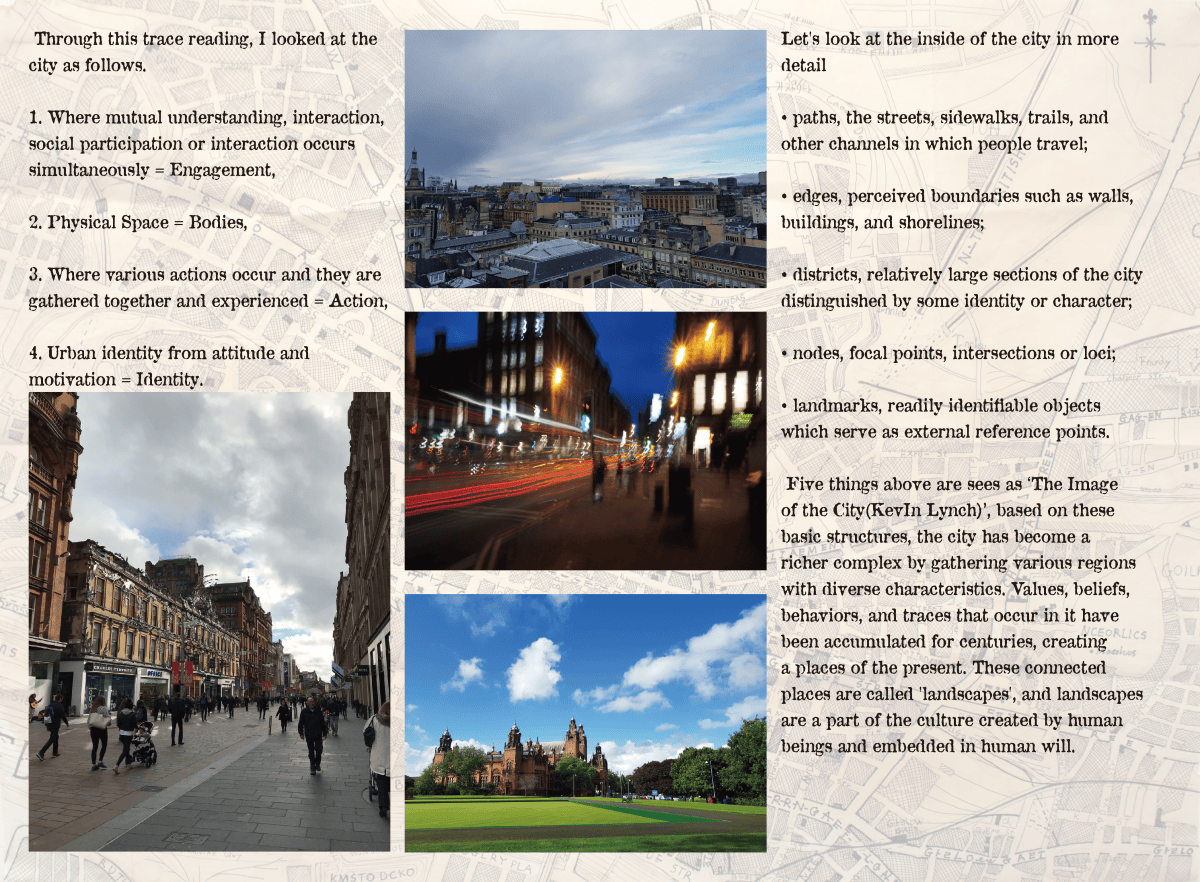
Through this trace reading, I looked at the city as follows. 1. Where mutual understanding, interaction, social participation or interaction occurs simultaneously = Engagement, 2. Physical Space = Bodies, 3. where various actions occur and they are gathered together and experienced = Action, 4. Urban identity from attitude and motivation = Identity.
Let’s look at the inside of the city in more detail
paths, the streets, sidewalks, trails, and other channels in which people travel;
edges, perceived boundaries such as walls, buildings, and shorelines;
districts, relatively large sections of the city distinguished by some identity or character;
nodes, focal points, intersections or loci;
landmarks, readily identifiable objects which serve as external reference points.
Five things above are sees as ‘The Image of the City (KevIn Lynch)’, based on these basic structures, the city has become a richer complex by gathering various regions with diverse characteristics. Values, beliefs, behaviours, and traces that occur in it have been accumulated for centuries, creating a places of the present. These connected places are called ‘landscapes’, and landscapes are a part of the culture created by human beings and embedded in human will.
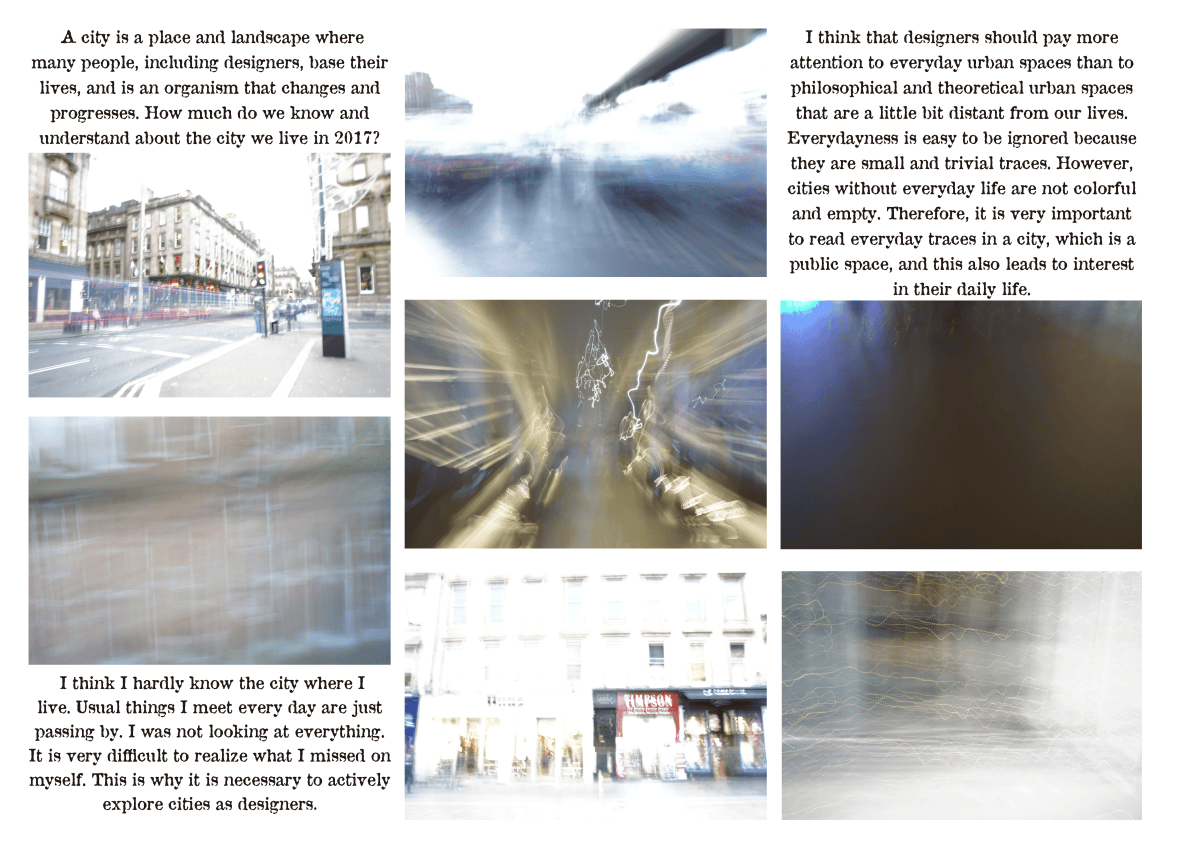
A city is a place and landscape where many people, including designers, base their lives, and is an organism that changes and progresses. How much do we know and understand about the city we live in 2017?
I think I hardly know the city where I live. Usual things I meet every day are just passing by. I was not looking at everything. It is very difficult to realise what I missed on myself. This is why it is necessary to actively explore cities as designers.
I think that designers should pay more attention to everyday urban spaces than to philosophical and theoretical urban spaces that are a little bit distant from our lives. Everydayness is easy to be ignored because they are small and trivial traces. However, cities without everyday life are not colourful and empty. Therefore, it is very important to read everyday traces in a city, which is a public space, and this also leads to interest in their daily life.
There are also ‘historical traces’ in the city. Therefore, the urban space can relate to the individual and collective traces and memories There are several devices in the urban space to protect them. For example, monuments that intentionally preserve memories often give the city an identity. Through them we recall and remember the past. A city with various traces can be described as a kind of “memory store”.
To better understand these everyday attributes and historical attributes, I suggest “city reading”. The data of numerous events that occur and disappear every day in the city leave traces. In this process some things are not found, and some are successfully recorded as data.
These are gathered to become traces, spaces, and places that have forms, behaviours, and meanings. In accordance with the characteristics of Interaction Design, I try to do data visualisation work from the viewpoint of the designer to explore the city as if reading a book.
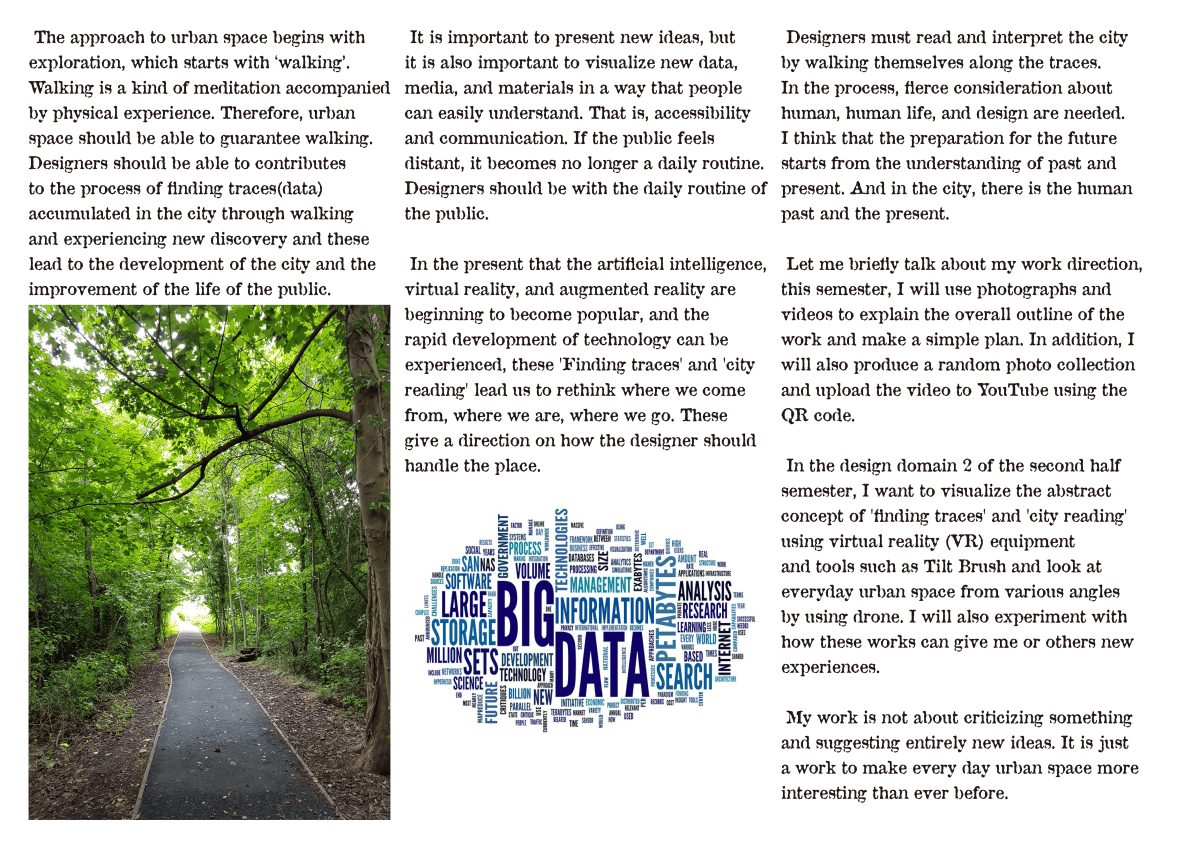
The approach to urban space begins with exploration, which starts with ‘walking’. Walking is a kind of meditation accompanied by physical experience. Therefore, urban space should be able to guarantee walking. Designers should be able to contributes to the process of finding traces(data) accumulated in the city through walking and experiencing new discovery and these lead to the development of the city and the improvement of the life of the public.
It is important to present new ideas, but it is also important to visualise new data, media, and materials in a way that people can easily understand. That is, accessibility and communication. If the public feels distant, it becomes no longer a daily routine. Designers should be with the daily routine of the public.
In the present that the artificial intelligence, virtual reality, and augmented reality are beginning to become popular, and the rapid development of technology can be experienced, these ‘Finding traces’ and ‘city reading’ lead us to rethink where we come from, where we are, where we go. These give a direction on how the designer should handle the place.
Designers must read and interpret the city by walking themselves along the traces. In the process, fierce consideration about human, human life, and design are needed. I think that the preparation for the future starts from the understanding of past and present. And in the city, there is the human past and the present.
Let me briefly talk about my work direction, this semester, I will use photographs and videos to explain the overall outline of the work and make a simple plan. In addition, I will also produce a random photo collection and upload the video to YouTube using the QR code.
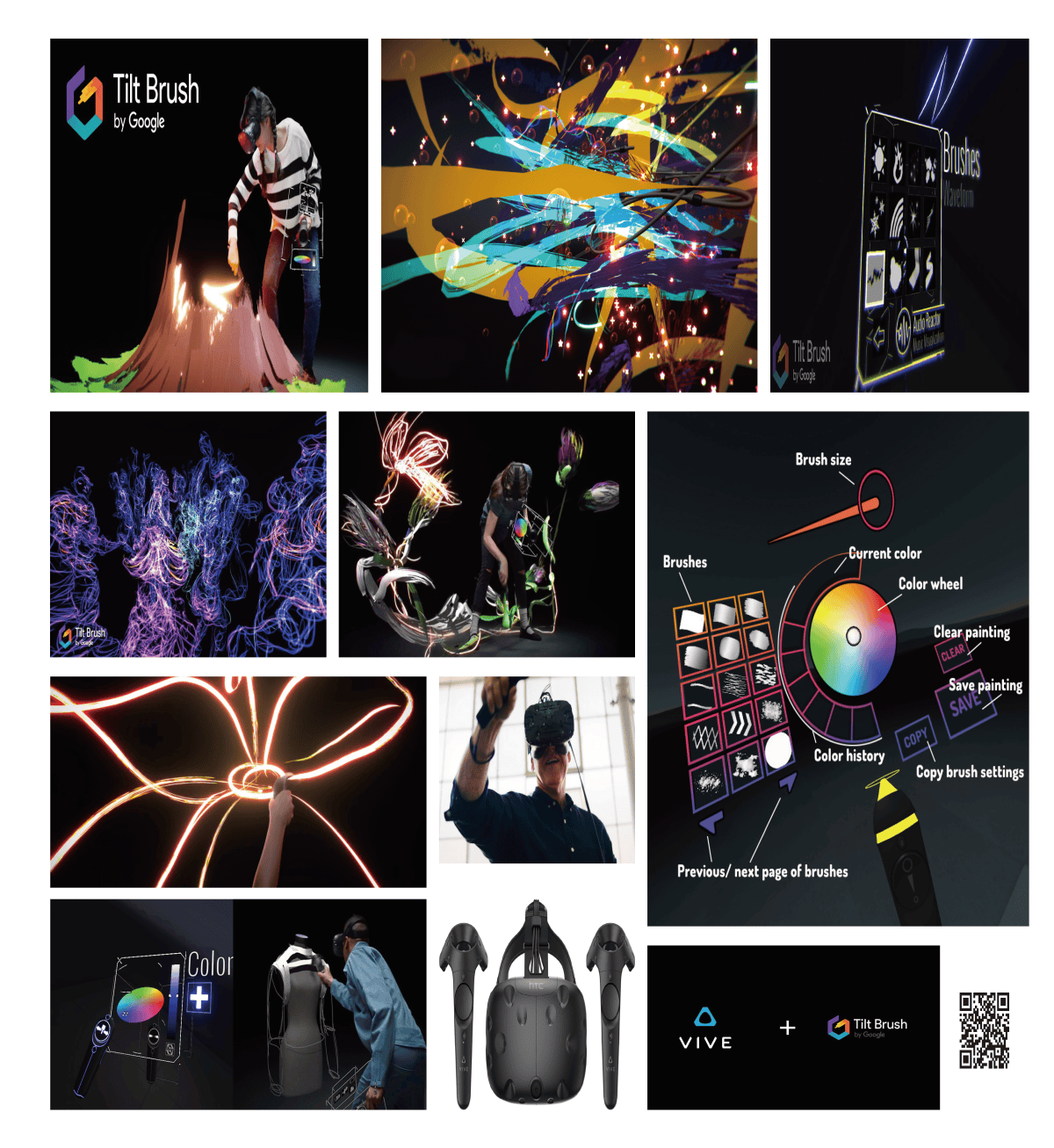
In the design domain 2 of the second half semester, I want to visualise the abstract concept of ‘finding traces’ and ‘city reading’ using virtual reality (VR) equipment and tools such as Tilt Brush and look at everyday urban space from various angles by using drone. I will also experiment with how these works can give me or others new experiences.
My work is not about criticising something and suggesting entirely new ideas. It is just a work to make every day urban space more interesting than ever before.
And I made 10 A3 size workbooks, photo albums, and videos as visuals on my thoughts.
On Friday afternoon, our course exhibit project on Reid building second floor. Project was successfully ended.
Part 2: Course Aims and Intended Learning Outcomes
Course Aims: To broaden awareness of design outwith specialist discipline areas, and understand the relationship(s) between design disciplines.
Intended Learning Outcomes: On completion of this course students should be able to:
Demonstrate knowledge of the scope of design as expressed via its main theories, concepts and principles within both specialist contexts and the broader design domain.
Demonstrate an awareness of the importance of research.
Apply knowledge, skills and understanding within the context of set project(s) and using some advanced professional skills.
Undertake critical analysis of design theories, concepts, processes and practice
Present complex arguments, information and ideas relevant to the practice of design in a structured, coherent form, using a range of communication methods, to a range of audiences.
Use standard IT applications in the research development and presentation of design project work.
Exercise initiative and independence when carrying out project work.
Take account of own and others’ roles and responsibilities when carrying out and evaluating tasks.
Work, under guidance, with others to acquire an advanced understanding of current design thinking and practice.
You will meet the outcomes/objectives listed above through a combination of the following activities in this course:
A studio based research- and practice-led project exploring specific theme(s) surrounding the broad design domain, relative to design subject specialism, supported by seminars, presentations, workshops etc., underpinned by self- directed study.
Completion of the formative and summative assessments.
The ‘Design Domain’ project proceed each semester for three weeks. In the first semester, students require understanding of the overall project and making a ideas and plan, in the second semester, student need to produce final result based on first semester research.
In the first semester, my project theme was ‘city’. But, In the first semester assessment feedback, tutor said my first semester project idea would not fit in the theme they given and they suggest to change idea little bit. In this semester, I try to make a final outcome will be a more interactive and future-oriented than before.
At first, I tried to construct a new type city by using Unity as a theme of smart city. To do this, however, I need to create all of new building models using 3D tools such as Maya or Blender. But, I did not have experience about using 3D tools before, I thought it is really hard to finish on time. So, I looked for another way.
Finally, I decided to make a animation. Because, It was confident and it would take less time to draw with animation than with 3D graphics.
This semester work will be based on a IT conference called the Consumer Electronics Show (CES) 2018. What is ‘CES 2018’?CES (formerly an acronym for Consumer Electronics Show but now the official name) is the world’s gathering place for all those who thrive on the business of consumer technologies. It has served as the proving ground for innovators and breakthrough technologies for 50 years — the global stage where next
generation innovations are introduced to the marketplace. This year Jan also more than 4,500 companies entered and came up with more advanced technologies than last year.
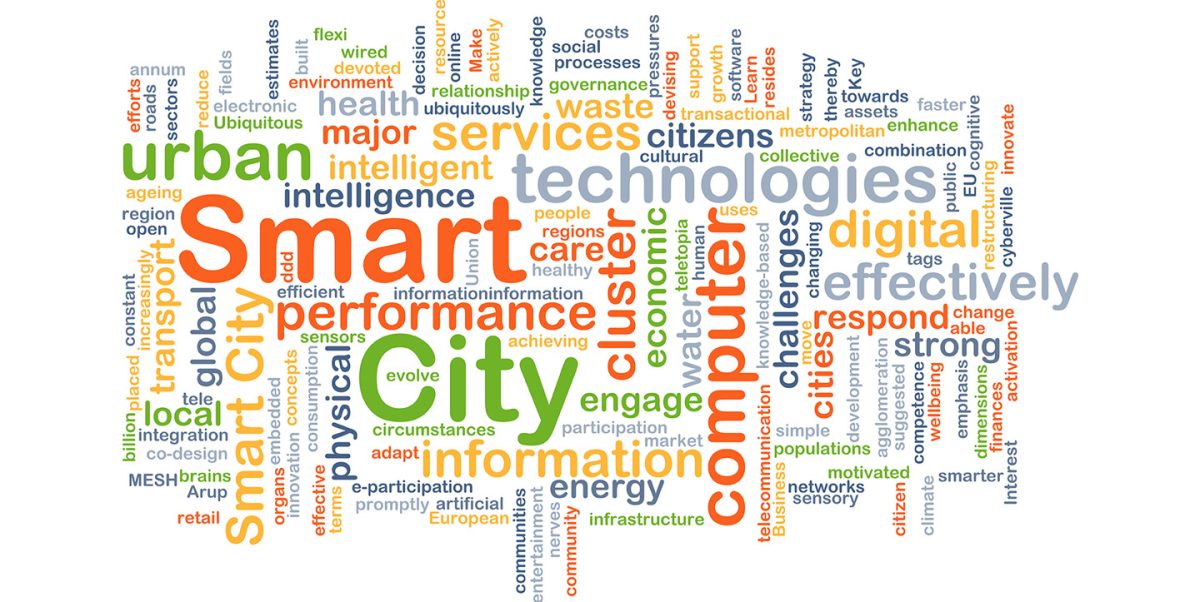
At CES, an agenda is presented every year. The theme of this year’s CES 2018 was “The future of Smart Cities” based on 5G networks. 5G can connect about one million devices per square kilometre. It shows the scalability and connectivity that the existing 3G or 4G did not have. Accordingly, various changes are appearing in various fields such as self-driving car, mixed reality (Virtual Reality + Augmented Reality), artificial intelligence, and Internet of things.
What is smart city?
A smart city is an urban area that uses different types of electronic data collection sensors to supply information which is used to manage assets and resources efficiently. This includes data collected from citizens, devices, and assets that is processed and analysed to monitor and manage traffic and transportation systems, power plants, water supply networks, waste management, law enforcement, information systems, schools, libraries, hospitals, and other community services.
The smart city concept integrates information and communication technology (ICT), and various physical devices connected to the network (the Internet of things or IoT) to optimise the efficiency of city operations and services and connect to citizens. Smart city technology allows city officials to interact directly with both community and city infrastructure and to monitor what is happening in the city and how the city is evolving.
ICT is used to enhance quality, performance and interactivity of urban services, to reduce costs and resource consumption and to increase contact between citizens and government.
Smart city applications are developed to manage urban flows and allow for real-time responses. A smart city may therefore be more prepared to respond to challenges than one with a simple “transactional” relationship with its citizens. According to Prof. Jason Pomeroy, in addition to technology, smart cities “acknowledge and seek to preserve culture, heritage and tradition”, such as Barcelona in Spain. Yet, the term itself remains unclear to its specifics and therefore, open to many interpretations.
Major technological, economic and environmental changes have generated interest in smart cities, including climate change, economic restructuring, the move to online retail and entertainment, ageing populations, urban population growth and pressures on public finances. The European Union (EU) has devoted constant efforts to devising a strategy for achieving ‘smart’ urban growth for its metropolitan city-regions. The EU has developed a range of programmes under ‘Europe’s Digital Agenda”.
In 2010, it highlighted its focus on strengthening innovation and investment in ICT services for the purpose of improving public services and quality of life. Arup estimates that the global market for smart urban services will be $400 billion per annum by 2020.
Before I got into the work, I thought about the contents of the animation that fit the theme. As the new products released in the past few years are likely to be commercialised in the next few years, they have been incorporated into the current city landscape and visualised. I found an article and an introduction video of this year’s conference and extracted only the technologies that would be useful in real life.
I need to determine the length of animation. But, at that time, I was not sure can I finish 1 min animation has 24 frame per second. So in the beginning, I aimed on 8~10 frame per second for 1 min animation. However, in the working process, I felt just a minute animation still has a lots of work than I expected. Finally, animation length change 1 min to 30 sec.
To reduce the amount of work, I was filming a street and then divided into frames using Photoshop. After that, I used the light box to copy each frame. It took me about a week more. After all the background was drawn, I combined with background and new technology things using Photoshop.
After the Photoshop process, I linked the frame by frame and make around 2 min video that include animation and description of my work. Moreover, I made a booklet about the technologies that I expressed on animation.
EPSON MFP image
EPSON MFP image
EPSON MFP image
EPSON MFP image
EPSON MFP image
EPSON MFP image
EPSON MFP image
EPSON MFP image
EPSON MFP image
EPSON MFP image
EPSON MFP image
EPSON MFP image
EPSON MFP image
EPSON MFP image
EPSON MFP image
Working Process
It is the origin of the background painted with a light box behind the paper after dividing one frame by Photoshop after taking a picture. The paper size is A4.
EPSON MFP image
EPSON MFP image
EPSON MFP image
EPSON MFP image
EPSON MFP image
In Case of moving image of a car, used Photoshop and synthesise car and background, and then attached to each frame. The video below is the final animation work.
After finishing the animation work, I added 2 minutes of additional images for animation + smart city, and made a booklet about the technology introduced in the animation.
In the booklet, I am try to research for enterprise that we might have heard about once shch as Samsung, Intel, Google etc. Although there were a lot of innovative technologies in the start-up have, but, it was impossible to analyse all of company where participated in CES 2018. Because, I do not have enough time…
I have also made an introductory booklet of other companies such as Nvidia, Bosch, Huawei, Sony, BMW and IBM, but excluded it to reduce the capacity of mobile pages.
Exhibition was originally scheduled on Friday afternoon from the second floor of Reid building. However, due to heavy snowfall on Wednesday to Friday, the school was closed until next Monday. So the exhibition was postponed to next week, but it was finished successfully.